

Six inches sounds simple until you try to picture it without a ruler. You may know the number, but knowing how long it actually looks in real life is a different question. Is it about the length of your hand, a phone, or a common household object?
The easiest way to understand 6 inches is to connect the measurement to things you already recognize. A ruler gives you the exact length, while familiar objects, hand comparisons, and everyday examples can help you build a quick mental picture.
See how big is 6 inches really is, what it looks like on a ruler, and how you can visualize or estimate it without one. You will also find practical comparisons that make the measurement much easier to understand.
How Big Is 6 Inches?
6 inches is a length of 15.24 centimeters. It is also exactly half a foot, which gives you a quick way to understand the measurement. If you have a ruler nearby, finding 6 inches is straightforward. But without one, the number alone may still be difficult to picture.
The measurement is long enough to be noticeable but small enough to fit easily in your hand. That is why comparing 6 inches with familiar sizes can make it much easier to understand than simply looking at the number.
| Measurement | Equivalent |
|---|---|
| 6 inches | 15.24 cm |
| 6 inches | 152.4 mm |
| 6 inches | 0.5 feet |
| 6 inches | ½ foot |
So, if someone asks “How big is 6 inches?”, the simplest answer is 15.24 cm long, or half a foot. The next question is usually more visual: what does that length actually look like?
What Does 6 Inches Look Like?
Imagine a straight line measuring 15.24 cm from one end to the other. That is the physical length of 6 inches. It is not as short as a few inches, but it is nowhere near a foot long either.
A useful way to build a mental picture is to imagine the distance between two points rather than focusing on the number itself. Once you see 6 inches as a real length, it becomes much easier to compare it with objects, your hand, or other measurements.
Another simple reference is its position between nearby lengths. 6 inches is 1 inch longer than 5 inches and 1 inch shorter than 7 inches, so it sits right in the middle of those two measurements.
If you have access to a ruler, you can see this difference instantly. The 6-inch mark gives you an exact visual reference that you can later remember when estimating the same length without a measuring tool.
How Long Is 6 Inches on a Ruler?
On a standard ruler, 6 inches is exactly at the 6-inch mark. Starting from the zero point, count six complete one-inch spaces and you will reach the correct length.
The smaller markings between the numbers divide each inch into fractions. These allow you to measure more precisely when something is slightly shorter or longer than 6 inches.
For a quick visual reference:
0 inches → 1 → 2 → 3 → 4 → 5 → 6 inches
At the 6-inch mark, you have reached 15.24 cm on the metric side of a ruler.
One important point is that 6 inches is exactly half of 12 inches, and 12 inches make one foot. So if you are familiar with a standard foot-long ruler, the 6-inch point is right in the middle.
This makes a ruler one of the easiest ways to create a reliable mental reference. Once you have seen where 6 inches falls, you can use that visual memory when estimating the measurement elsewhere.
14 Real Things That Are About 100 feet long
How Big Is 6 Inches Compared to Your Hand?
Your hand can give you a quick visual reference for 6 inches, but it should not be treated as an exact measuring tool. Hand sizes differ from person to person, so the same 6-inch length will look different when compared with different hands.
Instead of assuming that one part of every hand equals 6 inches, use your own hand as a personal reference. Place a ruler beside your hand and see how 6 inches compares with your palm, fingers, or the distance across your hand. That gives you a reference based on your actual hand size.
For some people, 6 inches may look close to the length of their hand. For others, it may be noticeably shorter or longer. The important thing is not to memorize a universal hand measurement but to understand how your own hand compares with 6 inches.
This is especially useful when you need a quick estimate and do not have a ruler nearby.
Can You Measure 6 Inches With Your Fingers?
Yes, but only approximately. Fingers are different lengths and widths, so using a finger as a fixed measurement can easily give you an inaccurate result.
A better approach is to create your own finger reference first. Measure one of your fingers against a ruler and remember how its length compares with 6 inches. You can then use that personal reference when estimating the same distance later.
You can also use the space covered by several fingers or the distance between your fingertips, but these should be treated as visual estimates rather than precise measurements.
If accuracy matters, use a ruler or another known measurement. If your goal is simply to understand what 6 inches looks like, your fingers can be a surprisingly useful starting point once you know their approximate size.
9 Real Life Things That Are About 6 Inches Long
When a measurement has no familiar reference, six inches can still feel abstract. A better way to picture it is to connect the length with objects you may already use or recognize. The examples below are not all exactly six inches because manufactured products naturally vary. Instead, they show what a six inch length can look like in everyday life.
1. A 6 Inch Ruler

A small ruler marked to 6 inches gives you one of the clearest references for this measurement. It shows exactly where six inches begins and ends, while its smaller markings help you understand the spaces between whole inches.
Rulers exist to make length measurable instead of leaving it to guesswork. A 6 inch ruler is especially convenient for small objects because it fits easily into a pencil case, drawer, or desk.
If you want the most reliable mental picture of six inches, a ruler is the best place to start. Once you have seen that length, you can compare it with everyday objects much more easily.
2. A Large Smartphone

Some modern smartphones have a screen measuring around 6 inches diagonally. That makes them a useful visual reference, but there is an important detail to remember. A 6 inch phone screen does not mean the phone itself is exactly 6 inches long.
Phone screens are measured diagonally from one corner to the opposite corner. The actual phone may be longer because of its shape, frame, and rounded edges.
Still, if you have a phone with a screen close to 6 inches, holding it in your hand gives you a quick sense of how substantial six inches can look.
3. A Paperback Book

Many paperback books have a width or height that can come reasonably close to six inches, depending on the book format. Their familiar rectangular shape makes them useful for visual comparison.
Books are designed in different sizes because publishers balance portability, readability, printing costs, and comfort. A smaller paperback can feel compact in your hands while still providing plenty of reading space.
If you place a ruler beside a paperback, you can quickly see how six inches compares with its shorter side. That gives you a more realistic picture than imagining the number alone.
4. A Kitchen Knife
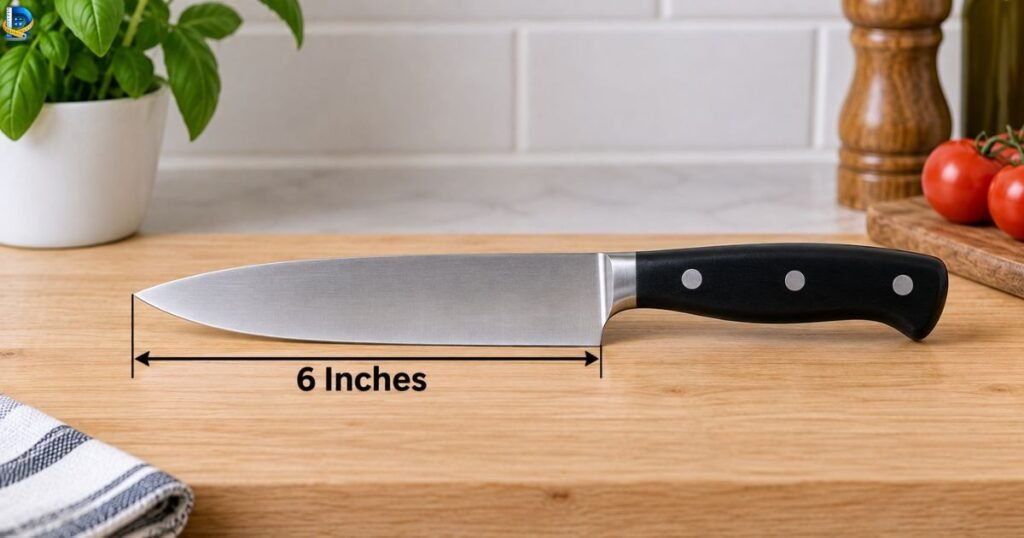
The blade of a small kitchen knife can be around six inches long. This makes a knife a useful example when you want to understand the physical reach of this measurement.
Kitchen knives come in many shapes and sizes because different foods require different cutting techniques. A shorter blade can provide greater control for smaller preparation tasks.
However, knife measurements vary considerably, so it should only be used as an approximate reference. The handle can also add several more inches to the overall length.
5. A Wallet
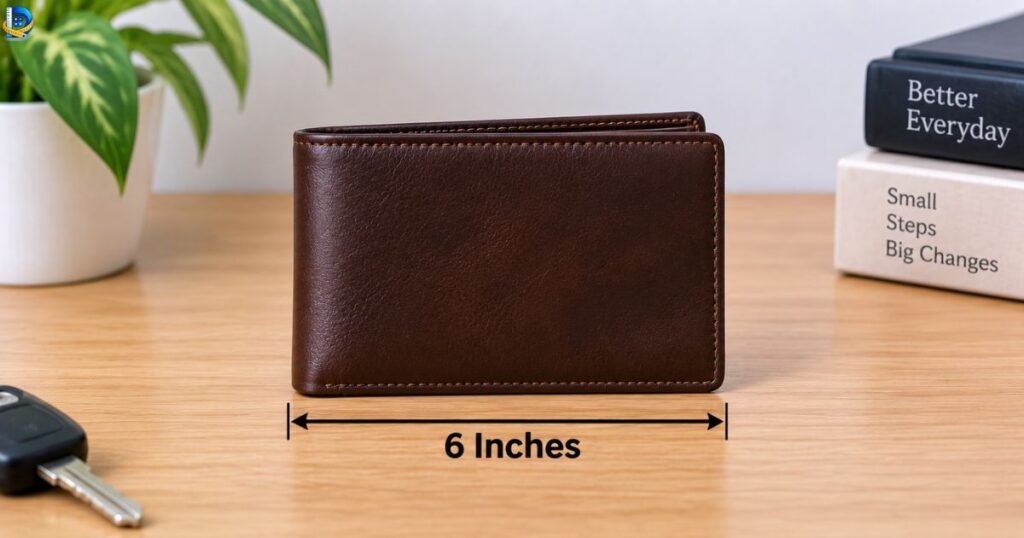
A typical wallet can have one dimension close to six inches when opened or fully extended, depending on its style. This makes it an easy object to use when building a mental picture of the measurement.
Wallets were designed to keep small personal items organized and portable. Their compact shape allows them to hold cards, cash, and other essentials without taking up much space.
Because wallets come in many designs, not every wallet will match six inches. Checking your own wallet against a ruler once can turn it into a useful personal reference.
How tall is a Monster can, and what are its dimensions?
6. A TV Remote

Some television remotes measure around six inches in length, although modern designs vary widely. Their long, narrow shape makes them particularly easy to compare with a six inch ruler.
A remote is designed around one simple idea: letting you control a device from a comfortable distance. Its length provides enough room for buttons while keeping it easy to hold.
If your remote is close to six inches, place it beside a ruler and remember that visual distance. Later, seeing a similar object can help you estimate six inches without measuring again.
7. A Small Notebook
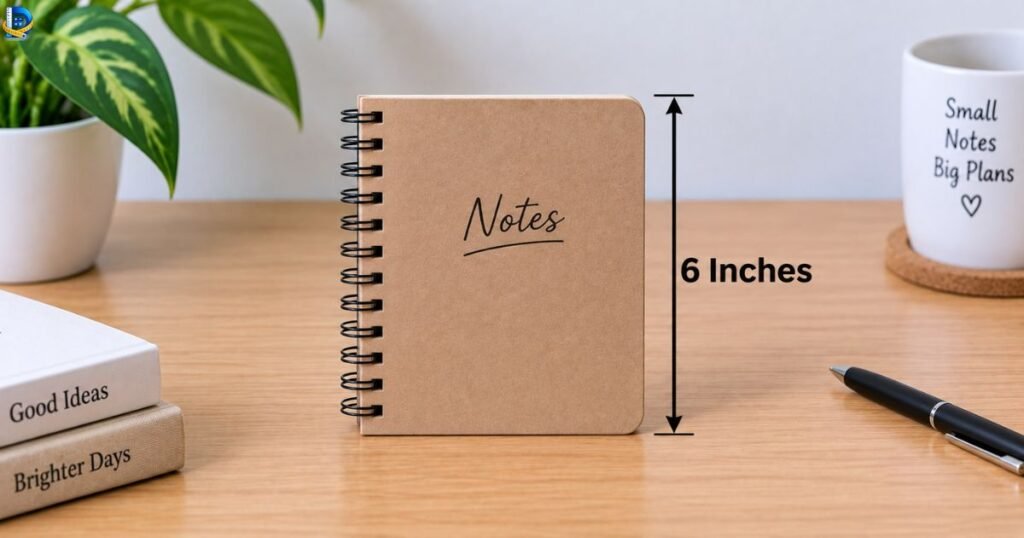
A small notebook may have one side close to six inches, depending on its format. Its flat rectangular shape makes the measurement easy to visualize because you can compare its edge directly with a ruler.
Notebooks have remained useful because they provide a simple place to record information without needing a digital device. Their sizes vary based on portability and writing space.
A notebook is especially helpful as a comparison because its edges create a clear beginning and ending point. If one side is close to six inches, the length becomes easy to see rather than imagine.
8. A U.S. Dollar Bill

A U.S. dollar bill is 6.14 inches long, making it one of the closest familiar objects to a six inch measurement. That is only about 0.14 inch longer than six inches.
U.S. paper currency uses a standardized size, which means dollar bills provide a much more consistent comparison than objects such as phones or wallets.
This makes a dollar bill particularly useful for visualizing six inches. Place it next to a ruler and the difference becomes clear. You can then remember that six inches is just slightly shorter than the full length of a dollar bill.
9. A 6 Inch Subway Sandwich
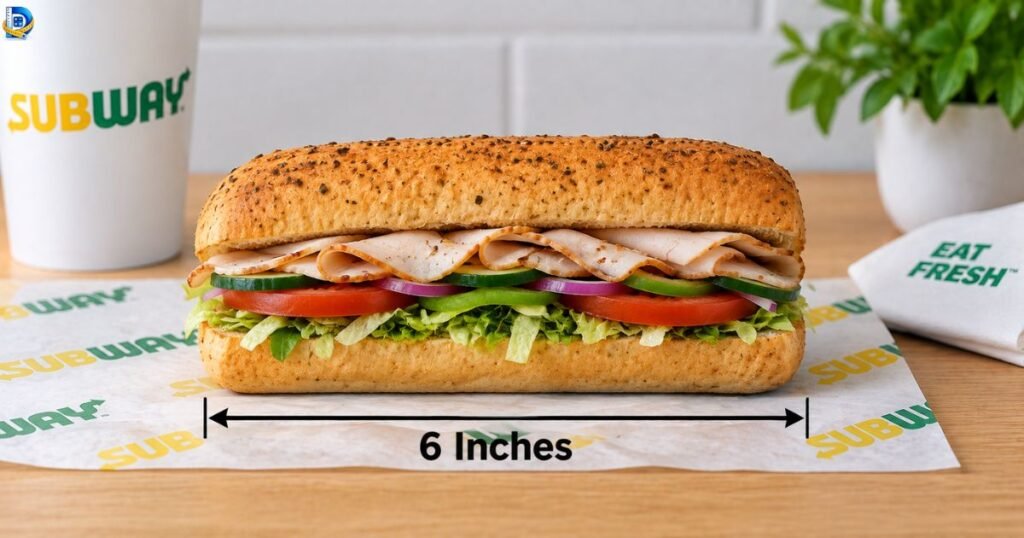
A 6 inch Subway sandwich gives you a very direct way to picture this measurement because the length is part of the product name. The smaller sandwich is intended to be about half the length of the larger 12 inch option.
That makes the comparison easy to remember. Imagine a one foot length divided into two equal parts. One of those parts is roughly the length represented by a 6 inch sandwich.
The sandwich is designed as a smaller serving for people who want a lighter meal or do not need a full length sandwich. Since bread is shaped and prepared by hand, its finished length can vary slightly.
Still, the name gives you a useful mental shortcut: 6 inches is roughly half the length of a 12 inch sandwich.
10. A Baseball
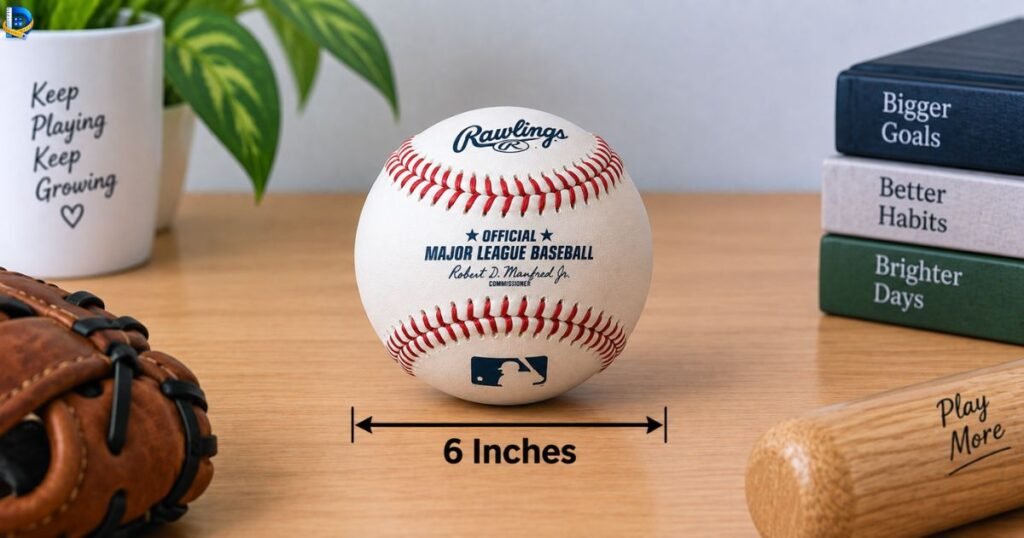
A baseball is not 6 inches long, so it should not be treated as an exact six inch object. Its circumference is roughly 9 inches, while its diameter is only about 3 inches.
That difference makes a baseball useful for understanding something else about six inches. If you imagine placing two baseballs side by side, their combined width comes close to 6 inches.
Baseballs have a compact round design because they need to withstand repeated impacts while remaining comfortable for players to grip and throw. Their standardized size also makes them a familiar reference for judging smaller measurements.
So, rather than thinking of one baseball as six inches long, picture two baseball widths placed side by side. That gives you a much better visual sense of the distance.
11. A Banana

A medium banana can often be around 6 inches long, making it one of the more natural household comparisons for this measurement. However, bananas vary in length because they are natural products rather than manufactured objects.
Their curved shape also matters. When you look at a banana, its overall visual length follows the curve rather than forming a perfectly straight six inch line.
Bananas have a distinctive curved shape because of how the fruit grows toward sunlight. Their size changes as they mature, which is why one banana may look noticeably longer or shorter than another.
For visualization, imagine a medium banana placed beside a ruler. If its measured length is close to 6 inches, it provides an easy reference you can remember when you do not have a ruler nearby.
12. A Digital Caliper With a 6 Inch Measuring Range

A digital caliper is different from the other examples because its 6 inch measurement usually refers to its maximum measuring range, not its physical length.
A common 6 inch digital caliper can measure objects up to about 6 inches across its measuring capacity. Its digital display then shows the measurement with much greater precision than you could normally get by estimating with your hand.
Calipers are designed for accurate measurements in workshops, manufacturing, engineering, and other situations where small differences matter. Their jaws can measure outside dimensions, while other parts can help measure inside dimensions and depths.
This makes a 6 inch digital caliper useful for understanding the meaning of six inches from another angle. Instead of simply showing what six inches looks like, it shows how much physical distance can be measured precisely within that range.
How Heavy Is 10kg? 12 Real-Life Examples
What Household Objects Are About 6 Inches?
If you need a quick reference, several everyday objects can help you picture 6 inches. The key is to use them as approximate comparisons because manufactured objects come in different sizes.
A dollar bill is one of the closest familiar examples. It measures 6.14 inches long, so it is only slightly longer than 6 inches. A small ruler can provide an exact reference, while some smartphones, wallets, remotes, notebooks, and kitchen tools may have one dimension close to 6 inches.
The most useful object is the one you already have nearby. Measure it once, remember how it compares with 6 inches, and you will have a personal reference for future estimates.
How Can You Visualize 6 Inches Without a Ruler?
You do not always need a ruler to get a rough idea of 6 inches. The easiest method is to connect the measurement with something familiar rather than trying to imagine the number by itself.
Use a Familiar Object
Start with an object whose size you already know. A dollar bill is particularly useful because it measures about 6.14 inches long.
You can also compare the distance with a small ruler, phone, wallet, remote, or another object that has a similar dimension. The goal is not perfect accuracy. It is to give your eyes a recognizable reference for the length.
Use Your Hand
Your hand can provide a convenient personal reference, but everyone’s hand is different. Instead of assuming that a particular part of every hand equals 6 inches, compare your own hand with a ruler once.
You may find that 6 inches is close to the length of your hand, shorter than it, or extends beyond part of it. Once you know your own comparison, estimating the same distance becomes easier.
Use a Sheet of Paper
A standard sheet of U.S. letter paper measures 8.5 by 11 inches. That gives you a useful known size for estimating shorter lengths.
Six inches is about 71% of the 8.5 inch width. It is also a little more than half of the 11 inch length.
You can use those proportions to create a rough visual estimate when no ruler is available.
Use Your Phone
Your phone can work as a reference if you know its actual dimensions. Many smartphones have a body length or screen dimension that can help you estimate 6 inches.
Just remember that a phone’s screen size is normally measured diagonally. The phone’s physical length and its screen measurement are not the same thing.
Can I Use My Phone as a Ruler for 6 Inches?
Yes, but the accuracy depends on how you use it. Some phones can run ruler or measurement apps that use the camera and screen to estimate distances.
You can also use the physical dimensions of your phone as a reference if you know them. However, you should not assume that every phone is exactly 6 inches long.
For an accurate measurement, a real ruler is still the better choice. A phone is most useful when you need a quick estimate or visual reference rather than precision.
How Much Is 6 Inches in Centimeters, Millimeters, and Feet?
Six inches has several useful equivalents:
| Measurement | Equivalent |
|---|---|
| 6 inches | 15.24 centimeters |
| 6 inches | 152.4 millimeters |
| 6 inches | 0.5 feet |
| 6 inches | ½ foot |
| 6 inches | 0.1667 yards |
The conversion most people need is simple: 6 inches equals 15.24 centimeters.
Remembering that 6 inches is also half a foot can make the measurement easier to estimate when working with imperial measurements.
Is 6 Inches Big or Small?
Six inches is neither universally big nor small. Its apparent size depends on what you are measuring.
For a small household object, 6 inches can be a noticeable length. For a larger object, it may represent only a small portion of the total size.
The same measurement can also mean different things depending on how an object is measured. A phone screen, for example, is measured diagonally, while a sandwich is generally described by its length.
So, when someone asks whether 6 inches is big, the better question is 6 inches of what?
How Big Is a 6 Inch Cake?
A 6 inch cake usually refers to the cake’s diameter. Looking directly across the round cake from one edge to the other gives you approximately 6 inches.
That equals 15.24 centimeters across.
| Cake measurement | Approximate size |
|---|---|
| Diameter | 6 inches |
| Diameter in centimeters | 15.24 cm |
| Shape | Usually round |
| Height | Varies by recipe and design |
A 6 inch cake is relatively compact compared with larger celebration cakes. Its serving capacity depends on the cake’s height and how large each slice is.
The important point is that 6 inches describes the width across the cake, not normally its height.
How Big Is a 6 Inch Pizza?
A 6 inch pizza measures about 6 inches across from one edge to the opposite edge. That is 15.24 centimeters in diameter.
Because pizza size refers to diameter, the number can be misleading if you only imagine a six inch straight line. The pizza covers a circular area rather than a narrow six inch strip.
A 6 inch pizza is generally considered a small or personal size. Exact serving labels vary between restaurants, so one location may describe it differently from another.
Is a 6 Inch Pizza Small or Medium?
A 6 inch pizza is usually considered small or personal sized, rather than medium.
The easiest way to picture it is as a circle about 15.24 centimeters wide. It is much smaller than a typical 12 inch pizza.
In fact, a 12 inch pizza has four times the area of a 6 inch pizza because the diameter doubles while the circular area increases much faster.
What Does 6 Inches of Hair Look Like?
Six inches of hair means approximately 6 inches of length from the point where you are measuring to the end of the hair.
How it looks can vary significantly because hair texture changes its appearance. Straight hair may show the full length more clearly, while curly or tightly textured hair can appear shorter because of its natural shape.
The starting point also matters. Six inches measured from the scalp looks different from six inches measured from an existing haircut.
For the clearest reference, imagine a 6 inch ruler placed alongside a strand of hair. That gives you the actual length without relying on appearance alone.
Is 6.1 Inches Much Bigger Than 6 Inches?
No. The difference is very small.
6.1 inches is only 0.1 inch longer than 6 inches. That equals 2.54 millimeters.
| Measurement | Length |
|---|---|
| 6 inches | 15.24 cm |
| 6.1 inches | 15.494 cm |
| Difference | 0.1 inch |
| Difference in millimeters | 2.54 mm |
For everyday objects, that difference may be difficult to notice without measuring it. It becomes more relevant when small size differences matter, such as comparing phone screens or precision measurements.
How Does 6 Inches Compare With 5 and 7 Inches?
Comparing nearby measurements is one of the easiest ways to understand 6 inches.
| Length | Centimeters | Difference from 6 inches |
|---|---|---|
| 5 inches | 12.7 cm | 1 inch shorter |
| 6 inches | 15.24 cm | Reference length |
| 7 inches | 17.78 cm | 1 inch longer |
Six inches sits directly between 5 and 7 inches. That means it is 12.7 centimeters plus another 2.54 centimeters, giving you the full 15.24 centimeters.
If you can picture a 5 inch object and a 7 inch object, six inches is simply the midpoint between them.
How Long Is 300 Feet? See 13 Real-Life Examples
Frequently Asked Questions About 6 Inches
What is an example of 6 inches?
A U.S. dollar bill is a useful example because it measures 6.14 inches long. It is very close to the 6 inch measurement.
How long is 6 inches?
Six inches is exactly 15.24 centimeters, 152.4 millimeters, or half a foot.
How big is 6 inches visually?
Six inches looks like a length of 15.24 centimeters. A dollar bill, which is 6.14 inches long, provides a particularly close everyday comparison.
How long is 6 inches without a ruler?
You can estimate 6 inches by comparing the distance with a familiar object, your own hand, a sheet of paper, or a phone with known dimensions.
How can I visualize 6 inches?
Think of 6 inches as half a foot or about 15.24 centimeters. Comparing that length with a familiar object makes it easier to picture.
What household object is 6 inches?
A U.S. dollar bill is about 6 inches long. Other objects such as some phones, remotes, wallets, and notebooks may have one dimension close to 6 inches.
What are some things that are 6 inches long?
Examples include a 6 inch ruler and a dollar bill that measures 6.14 inches. Some small household products may also have a dimension close to 6 inches.
Can I use my phone as a ruler?
Yes. A ruler app can provide an estimate, and your phone’s known dimensions can also work as a reference. For precise measurements, use a physical ruler.
Final Words
You now have a clearer picture of 6 inches and how it feels in real life. The everyday comparisons and simple references make the size easier to recognize without a ruler, giving you a practical reference you can remember and use anywhere.
With this reference in mind, you can recognize the measurement more easily while walking, working, playing, studying, shopping, or handling everyday tasks. If this guide helped, feel free to comment, share, or pin it for later.
1 thought on “How Big Is 6 Inches? What 6 Inches Looks Like in Real Life”